Ambassador School Programme
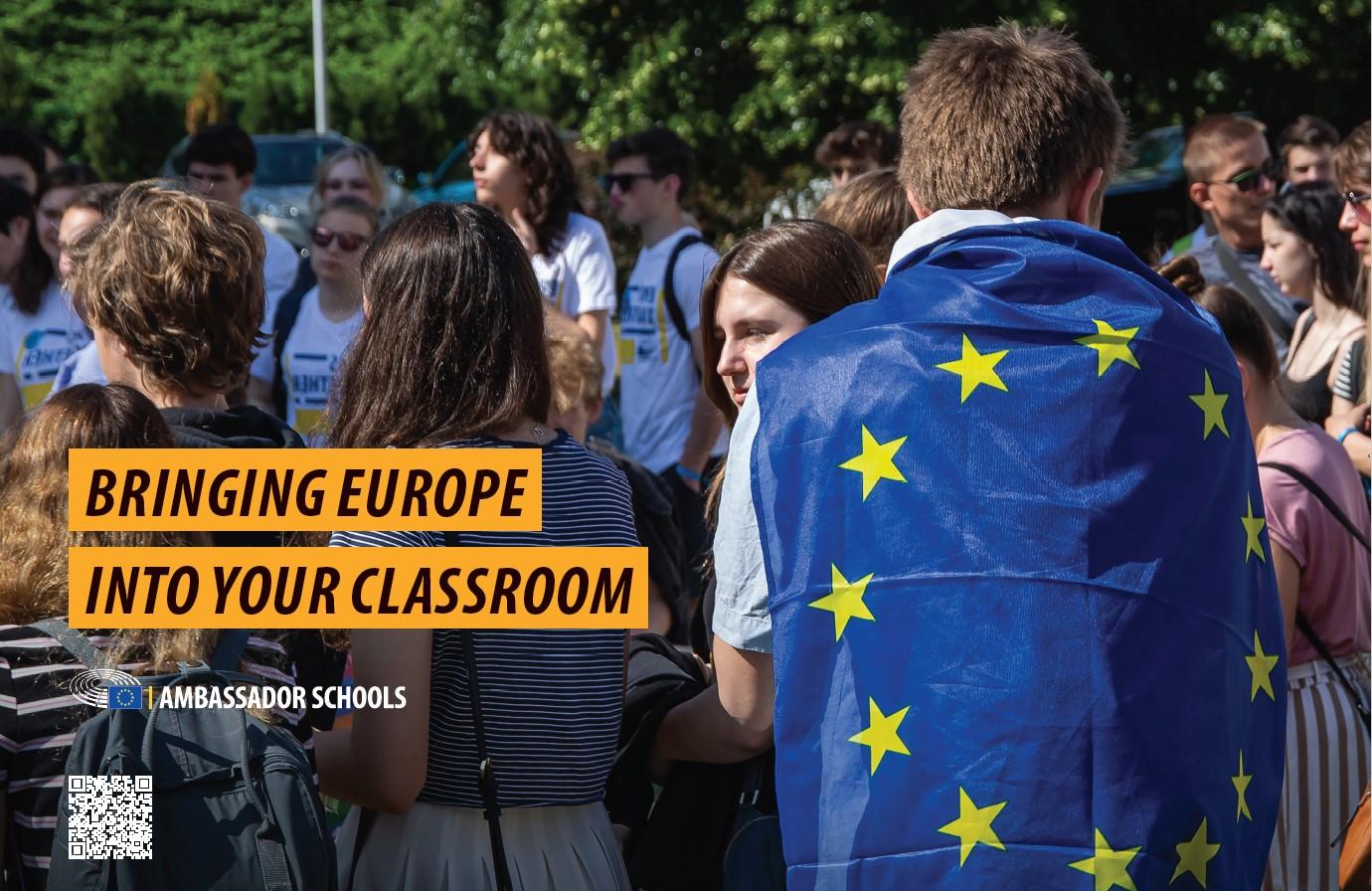
Welcome to the European Parliament Ambassador School (EPAS) Programme; a network of secondary and vocational schools across the European Union raising awareness of European parliamentary democracy and European citizenship values among students (14-18 years old), through active engagement with MEPs and the European Parliament.


By taking part in the programme, students will learn about the role of the European Parliament and will get the opportunity to actively engage with their MEPs. They will learn about European values, their rights as EU citizens and will be encouraged to participate in EU democratic processes. The programme is aimed at secondary school students (14-18 years old) and is a particular favorite of Transition Year (TY) students.
To register your interest for the 2026-2027 term, please contact Margaret at youth-epdublin@europarl.europa.eu.
PARTICIPATING SCHOOLS
Please click here for the list of Irish schools registered for the 2025-2026 term.
CRITERIA
The criteria to be met in order to achieve accreditation as an EPAS school at the end of the school term are listed below:
Designation of Senior and Junior Ambassadors
As the Senior Ambassador, teachers take care of the educational aspect, organising lessons on European parliamentary democracy based on the learning resources provided by the European Parliament and encouraging their students to become active European citizens. Senior Ambassadors must follow an introductory seminar organised by the EP Liaison Office at the beginning of the school year.
Junior Ambassadors are students selected by the Senior Ambassadors. They organise events and carry out activities aimed at raising awareness about European parliamentary democracy and EU values amongst pupils of their school and, possibly, to a wider public. For example they can organise the Europe Day event or be responsible for setting up and maintaining the EU Info Point. They liaise with MEPs, maintain contacts, and seek cooperation with other Junior Ambassadors, schools, organisations and "Europe Direct" centres.
Teaching material
At the beginning of the school year, all Senior Ambassadors will receive the teaching material provided by the EP and, on this basis, organise a cycle of lessons on European parliamentary democracy, political choice, and the European values set out in the Treaties. The Student Workbook in conjunction with the Teacher's Manual comprises 6 learning modules, covering the History of the EU, How the EU affects your life, Decision-making, Europe without borders, European values and Your voice in Europe. Senior Ambassadors may also use the interactive educational tool 'Europe at school - Active lessons about the European Union'. The tool is based on the concept of ‘learning by playing’, with quizzes, role-play games and exercises and comes with a teacher's manual. Additional complementary learning resources can be found here.
EU Info Point
All schools should establish and maintain an EP/EU Info point. The EU Info Point is an information and activity area set up in a prominent place on school premises and is dedicated to the European Union and the European institutions. It can display brochures and information about the EU, the work of the Parliament and MEPs, the various member states etc. The EU info-point can also be web-based, for example a dedicated page on a school website.
Europe Day event
All schools should organise an event/ceremony for Europe Day on or around 9 May. Some ideas for an event include: an EU debating competition, Mock European elections, Meet your MEP event, European music festival, European food tasting day, EU Quiz.
Additional criteria
Where possible, schools should activate and regularly update a social media account dedicated to their EPAS activities.
Schools can carry out complementary activities (e.g. to support the EP main communication efforts).
All schools should support the institutional, non-partisan information efforts during the school year before the European Elections.
ACCREDITATION
School evaluations will be carried out once a year and if all the conditions are met, the school will be officially designated a 'European Parliament Ambassador School' and certified as such. This includes the award of a plaque that can be displayed on the school premises. Plaques are presented to successful schools at an annual Awards Ceremony. Schools unable to attend the ceremony are encouraged to invite an MEP to their school to make the presentation on behalf of the European Parliament (e.g. on TY Graduation Day). Junior Ambassadors receive a special Junior Ambassador Certificate. All other students completing the programme receive a Certificate of Participation.
The designation as an Ambasssador school is reviewed annually. Schools need to re-register in the programme each year.
ADDITIONAL ACTIVITIES (optional)
- eTwin with other EPAS schools in Europe. eTwinning is the platform hosting the European community for schools and teachers for peer learning, professional development, and most importantly, for doing cross-border projects with their students.
- visit the Europa Experience in Dublin;
- take part in Euroscola competitions;
- take part in online Euroscola sessions;
- take part in Online Youth Talks organised by the European Parliament;
- apply to take part in the EU Model Council, an annual competition simulating a European Council whereby each school represents an EU member state.
You can find out more about the European Parliament Ambassador School programme across the EU here
#AmbassadorSchools
#EPASIreland
Youth
- Ambassador School Programme
- Euroscola
- Euroscola competitions
- Classroom resources